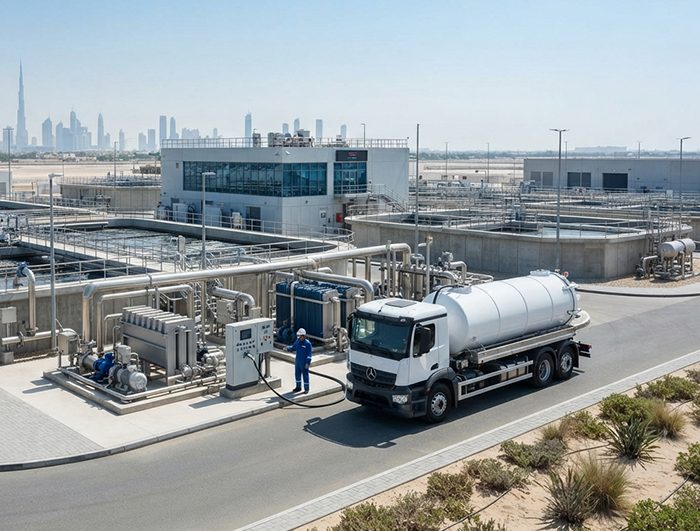
Industrial Wastewater Management in Dubai
8 Practical Strategies for Cleaner, Smarter Operations in 2026
Home | Blog
8 Practical Strategies for Cleaner, Smarter Operations in 2026
Home | BlogIndustrial wastewater is not simply another waste stream that needs to be removed from a facility. It can contain different levels of suspended solids, oils, chemicals, organic matter and other substances depending on the industrial process that produced it. If the wastewater is poorly managed, the consequences can include operational interruptions, infrastructure problems, environmental risks and compliance concerns.
For industrial operators in Dubai, effective wastewater management is becoming increasingly important in 2026. The emirate's regulatory framework includes waste-management legislation and updated executive regulations, while Dubai Municipality continues to publish technical guidance covering waste treatment, recycling, collection and transportation.
At the same time, Dubai's long-term waste strategy places greater emphasis on recycling, resource recovery, innovation and sustainable waste management.
This creates an opportunity for industrial businesses to rethink wastewater. Instead of treating it as something that simply needs to be removed, companies can manage it as a process that should be measured, controlled, treated and, where appropriate, reused.
Wastewater management covers much more than removing dirty water from a property.
It can involve the collection, transportation, treatment, disposal, monitoring and potential reuse of wastewater, depending on its source and characteristics.
For a commercial property, Wastewater Treatment Dubai services may be relevant when wastewater requires treatment before an appropriate discharge or reuse pathway.
For another property, the immediate requirement may be safe collection and transportation.
This is why Wastewater Management Dubai should be approached as a complete process rather than a single service.
A good system considers where wastewater is generated, how it is stored, how frequently it needs to be removed, where it can legally go, and whether any part of the treated water can be reused.
Industrial wastewater is water that has been affected by industrial activities.
Its composition can vary significantly.
A food-processing facility may produce wastewater containing organic material and fats. A workshop may generate wastewater containing oil and suspended solids. Manufacturing processes can introduce entirely different substances.
Because of this variation, there is no single wastewater treatment method suitable for every industrial facility.
Professional Industrial Waste water removal services in Dubai should begin with understanding the source and characteristics of the wastewater.
The more clearly a facility understands its wastewater, the easier it becomes to develop an appropriate management strategy.
Poorly managed wastewater can affect more than the environment.
It can also affect the facility itself.
Pipelines may experience deposits. Storage tanks can fill unexpectedly. Treatment systems can become overloaded. Production processes may be interrupted if wastewater cannot be handled efficiently.
This is why Industrial Wastewater Management Dubai should be incorporated into overall facility management.
A strong wastewater programme can help businesses:
The first step is understanding where wastewater comes from.
An industrial facility may have several different sources, including:
Treating all wastewater as one identical stream may not always be the best approach.
Source identification can reveal which processes generate the largest volumes and which ones contribute the highest contaminant loads.
This information can then be used to improve Industrial Wastewater Treatment Dubai planning.
Different wastewater streams may have different characteristics.
For example, wastewater containing oils may require a different management approach from domestic wastewater generated by employee facilities.
Separating streams where practical can make treatment more efficient and reduce the risk of unsuitable materials entering a treatment system.
It can also make monitoring easier.
A facility manager should know which process generates which wastewater and where that wastewater ultimately goes.
This source-to-disposal visibility is one of the foundations of effective Industrial Wastewater Management Dubai.
The best wastewater is often the wastewater that does not need to be generated in the first place.
Industrial facilities can examine their cleaning processes, water consumption, equipment operation and production methods to identify avoidable water use.
Simple questions can reveal useful opportunities:
Reducing wastewater generation can lower the pressure on treatment and collection systems.
It can also reduce operating costs over time.
Volume is only one part of the equation.
Industrial operators should also understand what is contained in their wastewater.
Depending on the facility, relevant parameters may include suspended solids, organic load, oils, pH and other substances.
Monitoring can help identify changes in wastewater quality before they create larger treatment problems.
It can also help treatment operators determine whether the selected process is performing as expected.
Professional Wastewater Treatment Services Dubai can support businesses where specialist assessment or treatment expertise is required.
Industrial wastewater storage should never be managed only when the tank is almost full.
A reactive approach can result in emergency collection requirements, overflow risks and operational disruption.
A better system uses historical wastewater-generation data to estimate when collection will be required.
This is particularly important for facilities without direct connection to an appropriate sewerage system or those relying on tanks and other temporary storage arrangements.
Professional Wastewater Collection Dubai can become more efficient when collection schedules are based on actual generation rather than guesswork.
When storage capacity is exceeded, the facility may face serious operational difficulties.
Wastewater can overflow. Odours may become noticeable. Access areas can become difficult to use. Production or cleaning activities may need to stop.
Emergency arrangements can also be more expensive and disruptive than planned collection.
For this reason, Wastewater Collection Dubai should be treated as a planned operational requirement for facilities that rely on wastewater storage.
One of the most important principles in wastewater management is that treatment should match the wastewater.
There is no universal process that works equally well for every industrial operation.
The appropriate solution depends on factors such as:
Professional Wastewater Treatment Dubai providers can assess the situation and recommend an appropriate approach.
The goal should be effective treatment rather than simply moving the wastewater from one location to another.
Industrial businesses should be particularly careful about wastewater discharge.
Dubai's Local Order No. 8 of 2002 states that industrial wastewater cannot be discharged into the public sewerage network unless the competent department verifies that the wastewater meets the applicable requirements, rules and standards.
This means industrial operators should not assume that any wastewater can be discharged through the public network.
Where treatment, collection or disposal requirements apply, businesses should verify current requirements with the relevant authorities and qualified professionals.
This is especially important because Dubai's waste-management framework has continued to develop, with the municipality listing the 2026 executive regulations associated with the Waste Management Law.
Once wastewater is properly treated, businesses may have opportunities to consider reuse.
Wastewater Recycling Dubai is becoming increasingly relevant as organisations look for ways to reduce freshwater consumption and improve resource efficiency.
Dubai's regulatory framework includes provisions concerning the use of treated sewage effluent, while the emirate's long-term strategy promotes recycling and resource recovery.
However, recycling should always be based on the intended application and applicable requirements.
Not every treated wastewater stream is suitable for every reuse purpose.
Businesses should therefore assess:
A properly planned Wastewater Recycling Dubai programme can potentially turn part of a waste stream into a useful resource.
Not all wastewater can or should be recycled.
Some wastewater streams may require appropriate disposal after collection and treatment.
In these cases, Wastewater Disposal Dubai should be handled through a suitable and compliant pathway.
Businesses should understand where their wastewater is being transported and what happens after collection.
Dubai Municipality's guidance emphasises responsibilities around the proper storage, collection, transportation and disposal of waste and the use of permitted waste-management companies where applicable.
The same principle of traceability is valuable for wastewater-related operations.
A business should maintain appropriate records of its wastewater management activities and service arrangements.
Good records help facility managers understand what is happening over time.
Useful information can include:
Documentation can also help identify trends.
For example, if wastewater generation increases significantly over several months, the facility can investigate the reason rather than discovering the change only when storage capacity becomes a problem.
Industrial facilities are increasingly able to use digital tools to improve wastewater management.
Tank-level sensors can help indicate when collection is required. Monitoring equipment can track selected wastewater parameters. Digital records can make maintenance histories easier to review.
These tools can support more proactive Industrial Wastewater Management Dubai.
Technology is not a replacement for professional assessment, but it can give facility managers better information for decision-making.
Instead of asking, "Is the tank full yet?", managers can potentially work from actual data and planned thresholds.
Cost reduction should not mean reducing treatment quality.
Instead, businesses should look at the entire wastewater process.
Using less water means less wastewater requiring treatment.
Keeping unnecessary materials out of wastewater can make treatment easier.
Separating wastewater types can help avoid treating relatively clean water as heavily contaminated wastewater.
Leaks, inefficient equipment and poor maintenance can increase water consumption.
Scheduled collection can be more predictable than repeated emergency arrangements.
Where technically and legally appropriate, treated water may provide an opportunity to reduce freshwater demand.
A well-designed Wastewater Treatment Services Dubai programme should therefore consider the entire lifecycle of wastewater, not just the treatment stage.
Even well-maintained facilities can experience unexpected wastewater incidents.
A pump can fail. A storage tank can reach capacity faster than expected. A treatment system can require maintenance.
Businesses should therefore have a contingency plan.
The plan should identify:
Having these answers before an emergency occurs can reduce response time.
These services should not be considered independently.
Imagine a facility that has a high wastewater generation rate but inadequate storage.
Even an excellent treatment system will not solve the immediate collection problem.
Similarly, a facility may have sufficient storage but no reliable disposal arrangement.
An effective wastewater programme connects all three stages:
Generation → Collection → Treatment → Disposal or Reuse
This is why businesses should look for integrated Wastewater Treatment Services Dubai when their operations require more than occasional wastewater removal.
Before choosing a provider, ask practical questions.
Can they handle industrial wastewater?
Do they understand the type of wastewater your facility generates?
Can they provide collection services?
Can they support treatment?
Can they handle emergency requirements?
Can they explain the disposal pathway?
Can they provide relevant documentation?
Do they understand applicable Dubai requirements?
These questions can help businesses choose a service provider based on capability rather than simply price.
The direction of wastewater management is becoming increasingly clear.
Businesses are moving from a "collect and dispose" mindset towards more structured approaches involving reduction, treatment, monitoring, recycling and resource recovery.
Dubai's long-term waste-management strategy supports innovation, recycling and conversion of waste into resources.
For industrial businesses, this creates a strong reason to review existing wastewater processes.
The question is no longer simply:
"How do we get rid of our wastewater?"
A better question is:
"How can we manage our wastewater more efficiently, responsibly and sustainably?"
Industrial wastewater management requires more than arranging a tanker when a storage tank is full.
It starts with understanding where wastewater comes from, how much is generated and what it contains. From there, businesses can develop appropriate collection, treatment, disposal and reuse strategies.
Industrial Wastewater Treatment Dubai can help address complex wastewater streams when the treatment process is appropriately selected.
Industrial Wastewater Management Dubai can provide a broader framework covering generation, monitoring, collection, treatment and final handling.
For businesses looking to improve resource efficiency, Wastewater Recycling Dubai can also offer opportunities where treatment quality, intended use and applicable requirements allow reuse.
At the same time, professional Wastewater Disposal Dubai remains important for wastewater that cannot be reused.
The most effective approach is proactive: monitor the system, maintain the infrastructure, plan collection, understand the regulatory requirements and review opportunities to reduce or reuse wastewater.
For industrial operators in Dubai, 2026 is a good time to look at wastewater management as a strategic part of facility operations rather than an unavoidable last-minute expense.
Industrial wastewater management involves controlling wastewater generated by industrial activities from the point of generation through collection, treatment, monitoring, disposal and possible reuse.
Industrial wastewater can contain contaminants that require appropriate treatment before discharge or reuse. Treatment can help businesses manage environmental, operational and compliance risks.
Not automatically. Dubai's regulations state that industrial wastewater must meet applicable requirements and standards before discharge into the public sewerage network.
Industrial wastewater originates from industrial processes and can contain process-specific contaminants. Domestic wastewater generally comes from bathrooms, kitchens and normal household activities.
Potentially. Properly treated wastewater may have suitable reuse opportunities depending on its quality, intended application and applicable requirements.
Businesses can review cleaning processes, repair leaks, improve equipment efficiency, reduce unnecessary water use and investigate opportunities to reuse water within suitable processes.
The frequency depends on wastewater generation, storage capacity and facility operations. A schedule based on actual generation is generally more reliable than waiting until a tank is full.
Consider wastewater characteristics, treatment capability, equipment, collection options, disposal pathways, documentation and the provider's understanding of applicable Dubai requirements.
Monitoring can help businesses identify changes in wastewater volume or quality, detect potential treatment issues and make better operational decisions.
No. Suitability depends on the wastewater characteristics, treatment process, intended reuse and applicable standards or approvals. Professional assessment should be carried out before implementing reuse.

Committed to delivering efficient wastewater collection and treatment, we ensure clean and sustainable solutions for a healthier future.