Automotive Oily Wastewater Disposal Dubai:
A Practical Guide for Workshops and Automotive Businesses
Home | Blog
A Practical Guide for Workshops and Automotive Businesses
Home | BlogAutomotive workshops, service centres, garages, car wash facilities and vehicle maintenance businesses generate more than ordinary wastewater. Water used for engine cleaning, vehicle washing, floor washing, parts cleaning and maintenance can contain oil, grease, detergents, suspended solids, fuel residues and other contaminants.
Because of this, simply allowing wastewater to flow into a normal drainage system is not an appropriate waste-management approach. Businesses need a controlled process for collection, transportation, treatment and disposal.
This is where oily wastewater disposal services in Dubai become important for automotive businesses that want to manage their wastewater responsibly while maintaining a clean and compliant workplace.
Dubai Municipality's current waste-management framework includes Law No. 18 of 2024 on Waste Management, Local Order No. 8 of 2002 concerning sewage, irrigation and water drainage, and the 2026 executive regulations for the waste-management law.
Automotive oily wastewater is wastewater generated during activities such as vehicle washing, engine cleaning, garage floor washing and routine vehicle maintenance.
Common sources of automotive oily wastewater include:
Unlike ordinary domestic wastewater, this wastewater may contain hydrocarbons, lubricants, oil droplets, grease, detergents, dirt and suspended particles.
Effective automotive workshop wastewater disposal Dubai practices begin with identifying wastewater sources and understanding the contaminants they contain.
Dubai Municipality distinguishes between sewage water, trade wastewater and hazardous wastewater. Proper classification helps automotive businesses determine suitable wastewater collection, handling and disposal procedures.
Automotive workshops generate wastewater through daily washing, cleaning and maintenance activities. Without proper management, oily residues can accumulate in drainage systems, cause unpleasant odours and create environmental risks.
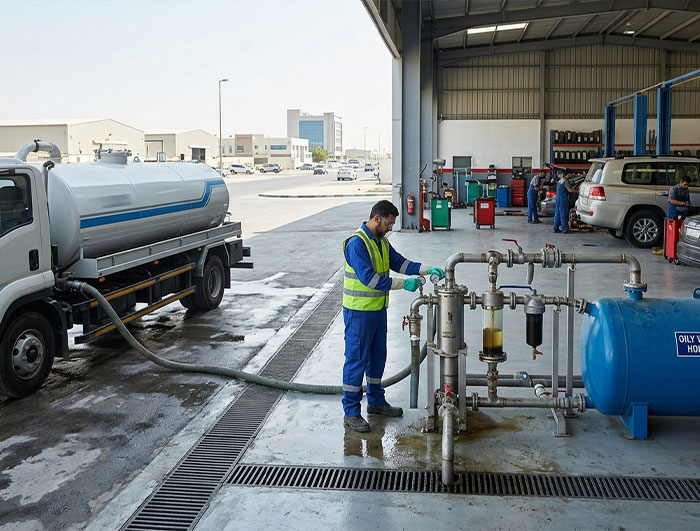
Professional car workshop wastewater disposal Dubai solutions help businesses manage wastewater through a controlled process, from collection to appropriate treatment or disposal.
An effective wastewater management system should consider:
These measures make oily wastewater treatment services Dubai an important consideration for automotive workshops handling oil-contaminated water and other automotive residues.
Automotive wastewater often contains a mixture of contaminants rather than a single pollutant. Its composition varies depending on the vehicle cleaning, maintenance and repair activities performed at the facility.
Common contaminants found in automotive oily wastewater include:
A vehicle washing centre may generate wastewater containing detergents, dirt and oil washed from vehicles. In contrast, a mechanical workshop may produce wastewater with higher concentrations of lubricants, grease and maintenance-related contaminants.
For this reason, automotive oily waste collection Dubai services should be planned according to the type, volume and contamination level of the wastewater generated.
Automotive oily wastewater disposal involves a series of controlled steps to ensure contaminated water is collected, handled, transported and directed to an appropriate treatment or disposal facility.
The process begins by identifying wastewater sources, including vehicle wash bays, service areas, equipment-cleaning zones and workshop floor drains.
Wastewater should be directed into a suitable collection system instead of being released uncontrolled. Professional oily wastewater disposal services in Dubai can help businesses arrange appropriate collection and handling.
Where suitable, oil-water separators can remove free oil and grease before further treatment. Appropriate separators and containment systems should be selected according to wastewater characteristics and applicable requirements.
Accumulated wastewater can be collected using suitable tanker vehicles and transported to an appropriate authorised destination. Dubai Municipality's RASID system supports the monitoring and regulation of registered waste-management companies.
The collected wastewater should be delivered to a suitable treatment or disposal facility based on its classification and contamination level. Professional trade wastewater removal Dubai services can help businesses arrange appropriate handling and disposal.
Automotive workshops generate wastewater through various daily operations, including vehicle component washing, floor cleaning, engine maintenance and oil residue removal. These activities can produce contaminated wastewater that requires proper collection and handling.
A structured automotive workshop wastewater disposal Dubai programme helps garages manage these waste streams efficiently while maintaining a cleaner and more organised working environment.
Depending on the facility's requirements, the programme may include:
Rather than waiting until a storage tank reaches capacity, workshops can establish a planned collection schedule based on wastewater generation, available storage and operational requirements.
Automotive businesses generate different volumes and types of wastewater depending on their size and daily activities. A small independent garage may require periodic collection, while a large service centre may need regular scheduled tanker services.
Car washes can produce substantial volumes of wash water, whereas mechanical repair workshops may generate smaller quantities with different contaminant levels.
Effective car workshop wastewater disposal Dubai solutions should therefore be tailored to each facility's operational requirements rather than relying on a one-size-fits-all approach.
Businesses should assess the following factors when planning wastewater collection:
Oily wastewater treatment involves more than removing visible oil from water. Depending on its composition, wastewater may require physical separation, filtration or other suitable treatment processes to manage contaminants effectively.
Professional oily wastewater treatment services Dubai help businesses identify appropriate handling methods based on wastewater characteristics, contamination levels and applicable disposal requirements.
Dubai Municipality provides technical guidance on wastewater management, including discharge requirements and waste-disposal procedures. Understanding these requirements helps businesses plan appropriate wastewater handling practices.
Professional assessment is particularly useful for automotive workshops that are unsure whether their wastewater should be classified as trade wastewater, hazardous wastewater or another waste category.
By choosing suitable treatment and disposal arrangements, automotive businesses can improve wastewater management, reduce environmental risks and support compliance with applicable regulations.
Collection is a critical stage of automotive wastewater management. Even when a workshop has a suitable drainage or containment system, improper collection practices can lead to spills, overflowing storage tanks and environmental risks.
Reliable automotive oily waste collection Dubai services help workshops remove accumulated oily wastewater and arrange appropriate transportation, treatment or disposal.
Automotive facilities may generate different types of oily waste, including used oil, oily sludge and oil-contaminated wastewater. Each waste stream should be handled according to its characteristics and applicable requirements.
Before handing over automotive oily waste, businesses should verify that their waste-management provider holds the relevant registrations and permissions for the specific waste collection, transportation and disposal activities.
Establishing a reliable collection schedule and maintaining appropriate waste-transfer records can help automotive businesses manage oily waste more efficiently and support compliance with applicable Dubai regulations.
Trade wastewater should be managed through appropriate collection, transportation and treatment or disposal procedures rather than being treated as ordinary drainage water.
When selecting trade wastewater removal Dubai services, automotive businesses should evaluate the following factors:
Dubai Municipality uses the RASID system to support the monitoring and regulation of registered waste-management companies and waste transportation. Businesses should verify that their chosen provider has the appropriate authorisation for the required services.
Careful provider selection helps automotive businesses maintain organised wastewater management, improve traceability and reduce the risks associated with improper disposal.
Proper disposal is essential, but reducing wastewater generation at the source can also help automotive businesses control operating costs and improve environmental management.
Remove loose oil, grease and dirt using suitable absorbent materials or dry-cleaning methods before washing workshop floors.
Use water-efficient cleaning equipment and high-pressure washing where appropriate to minimise unnecessary water consumption.
Inspect and maintain installed oil-water separators according to the manufacturer's recommendations and applicable requirements.
Store lubricants, fuels and cleaning chemicals correctly, and keep suitable spill-control materials available to minimise accidental contamination.
Ensure employees understand wastewater drainage arrangements, spill-response procedures and the correct handling of oily residues.
These practical measures can reduce wastewater volumes and contaminant loads, helping businesses manage oily wastewater disposal services in Dubai more efficiently.
Automotive wastewater management involves more than environmental protection. Businesses should maintain appropriate records of their wastewater collection, transportation, treatment and disposal activities.
Depending on the waste category and applicable requirements, documentation may include:
Dubai Municipality publishes waste-management legislation, executive regulations, technical guidelines and related regulatory information to support proper waste handling and disposal.
Maintaining clear and organised records helps automotive businesses monitor wastewater activities, support internal audits and demonstrate compliance with applicable requirements.
Businesses seeking reliable wastewater-management solutions can explore Trade Water Collection Dubai services as part of a comprehensive waste-management strategy. The appropriate collection method depends on the wastewater source, volume, composition and classification.
For automotive facilities, effective wastewater collection should be coordinated with suitable storage, transportation, treatment and final disposal arrangements. This integrated approach helps businesses manage wastewater more efficiently and maintain better control over their waste streams.
Selecting a suitable wastewater service provider helps automotive businesses manage oily wastewater safely and efficiently. Before making a decision, consider the following important questions.
Choose a provider with experience handling automotive wastewater and an understanding of the differences between sewage, trade wastewater and oily waste.
Regular collection arrangements can help workshops manage continuous wastewater generation and avoid storage overflow.
Confirm that the provider uses suitable transportation methods and holds the relevant permissions for the required waste-handling activities.
Ask about the intended treatment or disposal destination and verify that it is authorised to receive the specific wastewater category.
Ensure that appropriate collection records and disposal documentation are available to support traceability and responsible waste management.
Evaluating these factors helps automotive businesses select a service provider that matches their operational needs and applicable wastewater-management requirements.
Automotive businesses in Dubai generate wastewater containing oil, grease, detergents, dirt and other contaminants. Managing this wastewater responsibly requires more than simply removing it from the workshop.
An effective approach combines source control, proper collection, suitable containment, safe transportation, appropriate treatment and authorised disposal.
Whether you operate a small garage, a large automotive service centre, a car wash or a vehicle maintenance facility, reliable automotive workshop wastewater disposal Dubai, car workshop wastewater disposal Dubai, automotive oily waste collection Dubai, oily wastewater treatment services Dubai and trade wastewater removal Dubai solutions can help streamline your waste-management operations.
Businesses should verify the current regulatory requirements applicable to their specific wastewater stream and use appropriately registered or permitted service providers wherever required. Dubai Municipality provides legislation, technical guidance and waste-management information to help businesses plan suitable disposal procedures.
Ultimately, effective wastewater management starts with understanding what your workshop generates, controlling contamination at the source, arranging safe collection and ensuring that the wastewater reaches an appropriate treatment or disposal facility.
Automotive oily wastewater is contaminated water generated from vehicle washing, garage cleaning, mechanical servicing, parts washing and similar activities. It can contain oil, grease, hydrocarbons, detergents, dirt and suspended solids.
Oily wastewater requires controlled management because it can contain contaminants that should not be released through inappropriate drainage routes. Dubai has specific waste and wastewater legislation and technical guidance governing waste management and disposal.
Oily wastewater disposal services in Dubai generally involve the collection, transportation, treatment and appropriate disposal of wastewater containing oil and related contaminants.
There is no universal collection frequency. The schedule depends on wastewater generation, storage capacity, workshop activities and operational requirements. High-volume facilities may need more frequent collection than smaller garages.
Trade wastewater is generated by industrial or commercial activities, whereas sewage generally refers to wastewater from domestic activities. Dubai Municipality's technical guidance distinguishes trade wastewater from sewage and hazardous wastewater.
Workshops generating contaminated wastewater that requires controlled collection or disposal can benefit from an appropriately qualified waste-management provider to ensure the wastewater follows a suitable handling process.
Oily wastewater treatment services Dubai involve suitable processes for managing wastewater containing oil, grease and related contaminants before appropriate final disposal or further processing.
Not every tanker operator is necessarily authorised or equipped to handle automotive oily waste. Businesses should verify the waste category, transportation requirements and applicable permissions before arranging collection.
When choosing automotive oily waste collection Dubai services, consider the provider's registration, relevant waste-handling permissions, tanker capability, collection documentation, treatment and disposal arrangements, and experience with automotive wastewater.
Workshops can reduce wastewater volumes through controlled water usage, spill prevention, dry-cleaning methods, proper chemical handling, equipment maintenance and regular inspection of wastewater collection systems. These measures complement car workshop wastewater disposal Dubai services and improve overall waste management.

Committed to delivering efficient wastewater collection and treatment, we ensure clean and sustainable solutions for a healthier future.